Risks of Using Non-Cleared Software in Surgical Planning
Using non-cleared software in surgical planning introduces clinical, regulatory, and safety risks that can affect surgeons, hospitals, and patients.
Why Surgical Planning Software Carries Clinical Responsibility
Surgical planning is not a neutral step.
It sets the foundation for what happens in the operating room.
When software is used to guide planning decisions, it becomes part of the clinical process. That means it carries responsibility, even if it never touches the patient directly.
Non-cleared tools often lack a defined intended use. Their limitations may not be documented. And their behavior across different cases may not be fully understood. This creates uncertainty at a stage where clarity is essential.
Clinical Risks for Surgeons Using Non-Cleared Tools
Surgeons rely on planning systems for accuracy and repeatability.
When a tool is not FDA-cleared, there is no formal assurance that its outputs are consistent or clinically validated.
This can lead to unexpected discrepancies between planned and actual procedures. Surgeons may need to compensate intraoperatively, increasing cognitive load and procedural complexity.
Over time, this erodes confidence in the planning process itself. And the responsibility remains entirely with the surgeon, regardless of software limitations.
Regulatory and Legal Exposure for Hospitals
Hospitals are accountable for the technologies they deploy.
Using non-cleared software can conflict with internal compliance policies and external regulatory expectations.
In the US, this exposure is taken seriously. It affects procurement decisions, insurance coverage, and legal accountability. Even if a tool performs well technically, a lack of clearance can block its use at the institutional level.
From a risk management perspective, unregulated software creates avoidable uncertainty.
Impact on Patient Safety Before Surgery Begins
Patient safety is often associated with what happens during surgery.
But many risks are introduced earlier.
Inconsistent or unreliable planning increases the chance of downstream issues. These may not always lead to adverse events, but they add variability where precision is required.
FDA-cleared tools exist to reduce this variability. They introduce defined controls and accountability at the planning stage, where intervention is still possible.
Why FDA-Cleared Alternatives Exist
The purpose of FDA clearance is not to slow innovation.
It is to make innovation usable in real clinical environments.
FDA-cleared surgical planning tools define their role, document their limitations, and commit to ongoing oversight. This allows hospitals and surgeons to adopt AI with confidence, not uncertainty.
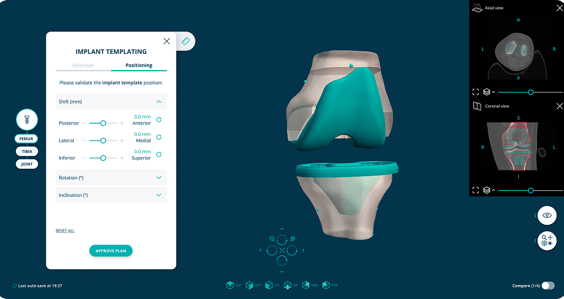
PeekMed applies these principles by offering FDA-cleared AI designed specifically for orthopedic planning, within established clinical and regulatory boundaries.
Non-cleared software does not just pose a patient safety risk. It places an additional burden on surgeons and exposes hospitals to avoidable regulatory issues.
In orthopedic surgery, where planning decisions carry real consequences, regulatory oversight matters. FDA clearance creates shared standards, clearer responsibility, and safer adoption of AI.
For US healthcare systems, regulated tools are not a constraint. They are the foundation that makes responsible innovation possible.
References
- FDA — Clinical Decision Support Software Guidance
- The Joint Commission — Health Information Technology Safety
- HIMSS — AI Governance