What Changes When Surgeons Start Planning Every Case
It usually starts with the complex cases. You don’t begin by planning everything. You start with the difficult ones. The cases where anatomy is less predictable. Where alignment isn’t straightforward. Where you know, even before stepping into the OR, that decisions will be tighter.
So you take more time. You look deeper into imaging. You explore options. You think through different scenarios. And the surgery feels… different. Not easier. But clearer.
Then something subtle happens. You begin to notice the contrast. Between the cases you planned thoroughly and the ones you approached more routinely. Same procedure. Same experience. But a different level of certainty. In one, decisions feel anticipated. In the other, they’re still unfolding. And once you see that difference, it’s hard to ignore.
Consistency in outcomes often starts with consistency in preparation
So you start expanding the habit. Not all at once. But gradually. Another case here.Another one there. Until planning stops being reserved for complexity and starts becoming part of your standard approach. This is where the real shift begins.
Because consistency doesn’t come from the OR. It comes from what happens before it. When planning is applied across cases, something changes in how decisions are distributed. Fewer are left for the moment of surgery. More are resolved earlier, when there’s still time to think, explore, and adjust. The earlier a decision is made, the less pressure it carries.
And that affects more than just the surgeon. The impact doesn’t stay at the individual level. It extends to the entire workflow. The team knows what to expect. The setup becomes more predictable. The procedure flows with fewer interruptions. Not because everything is rigid. But because fewer things are uncertain.
The best part? Variability starts to narrow. Not eliminated. But reduced. Across cases. Across days. Across different levels of complexity. Because when planning becomes consistent, outcomes tend to follow.
Why doesn’t this happen more often? If the benefits are clear, why isn’t every case planned?
Because consistency requires more than intent.It requires:
- time that fits into real schedules
- tools that don’t slow you down
- processes that feel natural
Otherwise, planning remains selective. And selective planning leads to selective consistency.
What makes planning scalable
For planning to happen in every case, it needs to:
- integrate into existing workflows
- be fast enough to use regularly
- provide value without adding friction
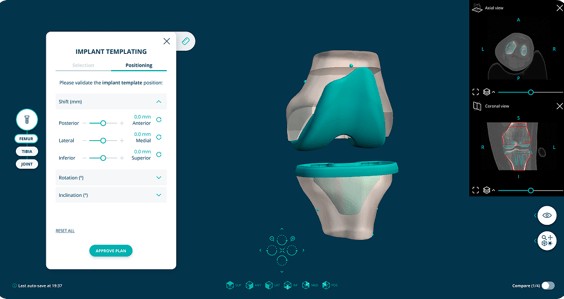
That’s where adoption is decided. Not in theory. But in daily practice. This is where platforms like PeekMed become relevant. Not because they introduce planning. But because they help make it consistent.By supporting:
- structured workflows
- patient-specific visualization
- faster, clearer decision-making before surgery
Planning becomes something you do every time, not just when the case demands it.
So what actually changes? Not your expertise. Not your clinical judgment. But the environment in which decisions are made. More clarity before the OR. Less uncertainty during it. And over time, a more consistent surgical practice.
You don’t need to plan every case perfectly. But when you start planning every case consistently, something shifts. Not in one procedure. But across all of them.
REFERENCES
- American Academy of Orthopaedic Surgeons. Clinical Practice Guidelines in Orthopaedics. 2022.
- Agency for Healthcare Research and Quality. Surgical Workflow and Outcomes. 2021.
- Centers for Medicare & Medicaid Services. Quality and Value-Based Care. 2023.
- Bozic KJ et al. Variability in orthopedic surgery outcomes. Clin Orthop Relat Res. 2014.
- Porter ME. Value-based healthcare delivery. N Engl J Med. 2010.