Does Preoperative Planning Improve Surgical Outcomes?
Everyone talks about better outcomes. But what actually drives them? Every surgeon is measured, directly or indirectly, by outcomes. Alignment. Implant positioning. Complication rates. Patient recovery. These are the metrics that matter. And over time, you develop a sense of what influences them. Experience plays a role. Technique plays a role. But here’s the real question: How much of the outcome is decided before the surgery even begins?
The assumption is simple. The reality is more complex. Preoperative planning is often associated with precision. Better measurements. Better alignment targets. Better implant selection. But outcomes don’t improve just because a plan exists. They improve when the plan changes decisions. And that’s where things get interesting.
Variability is still part of everyday practice. Even in standard procedures, no two cases are identical. You see it in: anatomical differences; intraoperative adjustments; small decisions that accumulate. Individually, these variations may seem minor. But over time, they create inconsistency. And inconsistency is what ultimately affects outcomes.
Here’s the deal: most variability doesn’t come from lack of skill. It comes from decisions being made too late. In the OR, decisions are faster, more reactive, and more constrained. Not because that’s ideal. But because that’s the environment.
Planning shifts where decisions happen
When planning is structured and consistent, something subtle changes. Decisions move upstream. You define alignment before the OR. You explore sizing before the OR. You anticipate constraints before the OR. So when the procedure begins, you’re not figuring things out. You’re executing.
And that’s where outcomes start to change. Not instantly. Not dramatically in a single case. But progressively. You begin to see: more consistent alignment; fewer intraoperative adjustments; more predictable execution. Better outcomes rarely come from better reactions. They come from better preparation.
What the evidence suggests
Clinical literature in Orthopedic Surgery has consistently shown that structured preoperative planning is associated with improved implant positioning accuracy, reduced surgical variability, and better reproducibility across cases. But here’s the important nuance. Planning doesn’t guarantee outcomes. It reduces the factors that compromise them.
The impact isn’t always obvious at first. You don’t always see the difference immediately. Because outcomes are influenced by multiple variables. But over time, patterns emerge. Fewer surprises. Fewer corrections. More control. You don’t notice the difference… until you do.
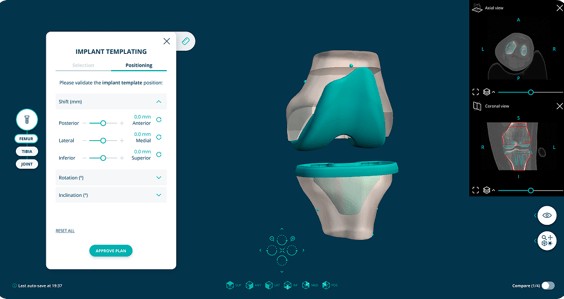
This is where platforms like PeekMed make a difference. Not by replacing clinical judgment. But by supporting it earlier in the process. Allowing you to visualize patient-specific anatomy, define surgical strategy before constraints appear, and reduce reliance on intraoperative adjustments. So decisions are made when you still have time, not when you don’t.
So, does planning improve outcomes?
Not on its own. But when it changes, when and how decisions are made? Yes. That’s when outcomes begin to shift.
Outcomes don’t change by chance. They change when variability is reduced. And variability is reduced when decisions happen earlier.
REFERENCES
- American Academy of Orthopaedic Surgeons. Clinical Guidelines in Orthopaedics. 2022.
- Agency for Healthcare Research and Quality. Surgical Outcomes and Variability. 2021.
- Centers for Medicare & Medicaid Services. Value-Based Outcomes in Surgery. 2023.
- Nunley RM et al. Variability in joint replacement outcomes. J Arthroplasty. 2015.
- Porter ME. Value in healthcare. N Engl J Med. 2010.